
How to join esports tournaments usually comes down to three things: finding legitimate brackets, meeting eligibility rules, and registering the right way so you don’t get disqualified on a technicality.
If you’ve ever clicked into a tournament page and immediately hit a wall, team requirements, region locks, confusing check-ins, weird rule PDFs, you’re not alone, and it’s not because you “aren’t ready.” A lot of amateur events are run by volunteers or small organizers, so the process can feel inconsistent.

This guide walks through where to find amateur tournaments in the U.S., what organizers typically require, and a practical checklist so you can join your first event without wasting a weekend on avoidable mistakes.
Where amateur esports tournaments actually live (and what each is best for)
Most beginners assume tournaments only happen on big publisher sites, but amateur competition is spread across a few common “homes,” each with different tradeoffs.
- Game community hubs (official Discords, subreddit posts, community sites): great for low-pressure events, but rules and admin quality vary.
- Tournament platforms (bracket + check-in tools): usually smoother registration and scheduling, better if you want structure.
- College/club circuits: if you’re a student, these can be surprisingly organized, sometimes with coaching and consistent seasons.
- Local LANs (PC cafés, events venues): best for in-person experience and meeting teammates, but travel and time become real factors.
According to Esports Insider, grassroots and community tournament ecosystems remain a major entry point for players outside pro pathways, which lines up with what most amateurs experience: you start in community brackets, then move upward if you enjoy the structure.
Before you sign up: the requirements that trip people up
Amateur events rarely require a résumé, but they do require compliance. The fastest way to have a bad first tournament is getting removed for something boring.
Eligibility basics (varies by game and organizer)
- Region and server: many brackets are “NA only” or even “NA East/West,” because ping matters.
- Rank limits: some events cap at a tier (for newer players) or require a minimum rank (to avoid mismatched skill).
- Age rules: some tournaments restrict minors or require parental consent, check this early.
- Platform: PC vs console vs crossplay can change everything, including how you report match results.
Account, identity, and anti-smurf policies
Many organizers require your in-game ID plus proof you own the account. Some ask for profile links, screenshots, or third-party verification. Don’t assume it’s optional, and don’t “borrow” an account even if your friend offers.
How to join esports tournaments step-by-step (a simple workflow)
If you want a repeatable process, use this flow and you’ll avoid 80% of the chaos.
- Pick one game and one format (solo, duo, full team), keep it simple for your first run.
- Find 3–5 upcoming events and compare rules, prize expectations, and time zones.
- Read the rules like you’re the admin: check roster locks, match start policy, substitutes, and how disputes work.
- Join the event Discord before registering, many check-ins and announcements happen there.
- Register early, then confirm your email, team roster, and required profile links.
- Do check-in (often 30–120 minutes before start), missing it is the #1 “we got dropped” story.
- Show up ready to report results, know where to submit scores and what evidence counts.
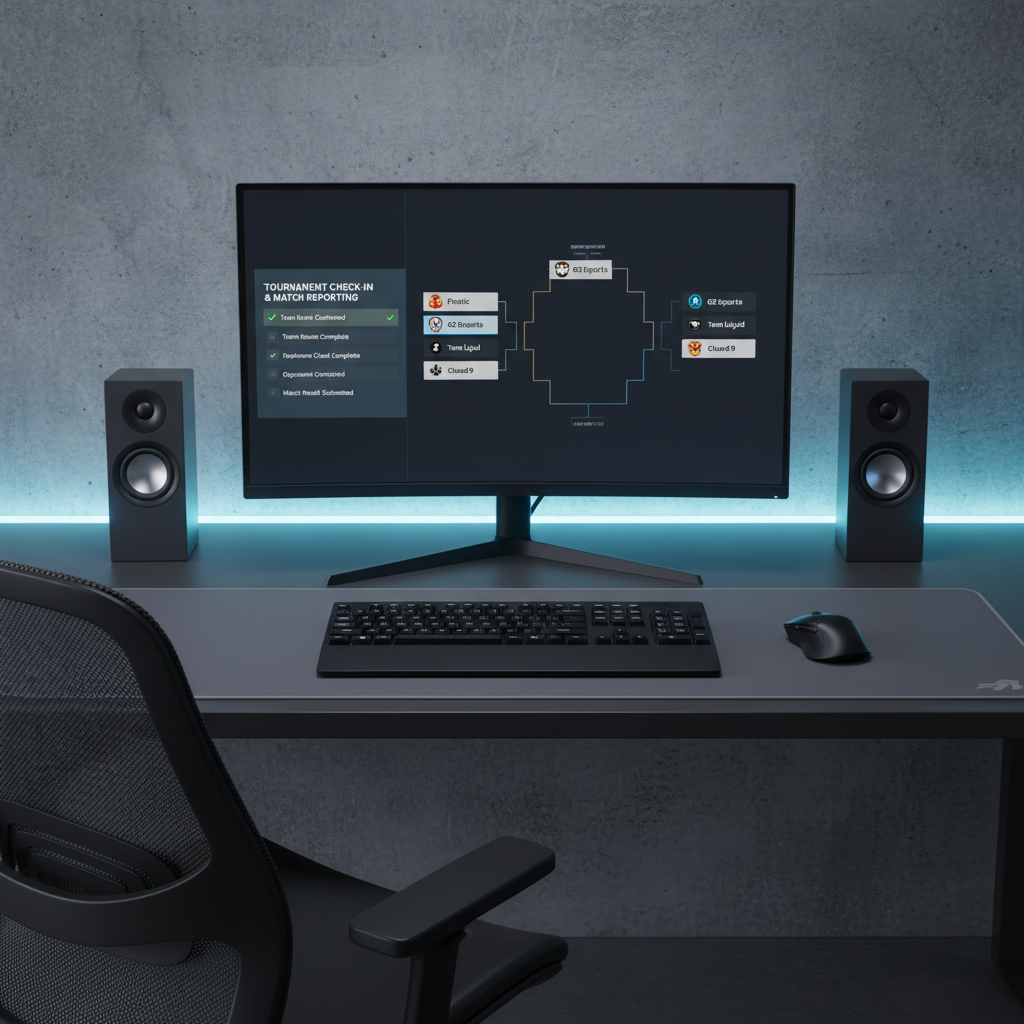
One small but real tip: if the organizer has a “how we run matches” channel, read it even if it feels repetitive, it usually contains the exact steps for reporting and the exact screenshots they accept.
Quick self-check: are you ready for your first amateur bracket?
You don’t need to be cracked to compete. You do need to be predictable and prepared.
- Schedule: can you commit to the full window (including delays), not just the posted start time?
- Communication: can you reliably use Discord voice or in-game comms for 2–4 hours?
- Stability: is your internet consistent enough that disconnects are unlikely? If not, consider LANs or smaller events.
- Rules tolerance: are you willing to record scores, take screenshots, and follow a dispute process if needed?
- Mental bandwidth: if you tilt easily, start with low-stakes weekly cups so you build comfort.
If you answered “no” to one or two, that’s normal, just choose an event with flexible scheduling and an active admin presence.
Choosing the right tournament: a practical comparison table
Not all amateur tournaments are worth your time. Use this as a quick filter.
| What you see | What it often means | Good fit for | Watch out for |
|---|---|---|---|
| Clear rules + posted schedule + admin list | Organizer has a process | First-timers | Strict check-in and punctuality |
| “DM to join” with few details | Small community event | Casual players | Last-minute changes, unclear dispute handling |
| Entry fee + prize pool | Higher expectations and enforcement | Committed teams | Refund rules, payment policies, legitimacy |
| Rank-capped beginner cup | Designed to reduce skill gaps | New competitors | Rank verification, smurf accusations |
For legitimacy, look for transparent organizer identity, consistent communication, and a history of completed events. If an event feels vague about payouts or rules enforcement, it might still be fine, but budget your expectations.
Match day: what to do so you don’t lose before you play
Match day is where people learn the hard way that “joining” is more than clicking Register.
30–60 minutes before start
- Do check-in immediately when it opens, even if you’re already online.
- Confirm your roster hasn’t been auto-locked without your final lineup.
- Update game client, graphics drivers, and verify voice comms, avoid surprise downloads.
During matches
- Screenshot key moments: final scoreboard, lobby ID, or match history page, whatever rules specify.
- Report scores right away, don’t wait until “after the set.”
- If something breaks, ping admins early and politely, most disputes go poorly when both teams wait.
If you run into a dispute
Stay factual, post the evidence the rules ask for, and keep emotion out of it. Disputes are usually decided by process, not vibes.

Common mistakes (and the boring fixes that actually work)
- Missing check-in: set two alarms, and make one on your phone, not just your PC.
- Not reading map/side rules: some games require hosting, veto formats, or server selection, know it before match start.
- Using unapproved substitutes: many events require subs to be registered before bracket start.
- Wrong region account: even if you can play, you might violate eligibility.
- Overcommitting to “serious” events: your first tournament should teach flow, not crush your weekend.
Also, keep expectations realistic. Many amateur brackets run late, and sometimes admins are juggling multiple matches. Patience is part of the skill set.
When it’s worth getting extra help (team, coaching, or admin support)
If you’re consistently joining events but not improving, the issue might not be mechanics, it might be preparation and review.
- You keep losing to coordination gaps: consider finding a consistent team, even if skill is mixed.
- You get nervous and play worse: a coach or structured team environment can help with routines and decision-making. Mental health concerns can be complex, if anxiety feels overwhelming, consider talking with a qualified professional.
- You’re unsure about eligibility or payment rules: ask the organizer in writing before paying an entry fee.
According to the Federal Trade Commission (FTC), it’s smart to use caution with online payments and to understand refund policies and terms before you pay, which applies to tournament entry fees too.
Key takeaways you can use this week
- How to join esports tournaments is mostly process: rules, check-in, and match reporting, not “being good enough.”
- Start with a beginner-friendly weekly cup or a community bracket with active admins.
- Join the Discord early, confirm eligibility, and set reminders for check-in.
- Collect the right proof for results and disputes, follow the organizer’s format.
Pick one event this week, register early, and treat your first run like a practice scrim with paperwork, you’re building the routine that makes future tournaments feel easy.
FAQ
What’s the easiest way to find amateur tournaments in the U.S.?
Look for community-run events tied to your game’s Discord servers and reputable bracket platforms. The easiest options usually have clear rules, a posted schedule, and an active admin channel.
Do I need a full team to enter, or can I join solo?
It depends on the game and format. Many titles offer solo/duo events, while others center on full rosters. If you’re new, solo events reduce coordination stress, but team events teach competitive communication faster.
How do I know if a tournament is legit before paying an entry fee?
Check whether the organizer has a history of completed events, transparent rules, and clear payout terms. If details are vague or admin communication feels evasive, consider skipping or sticking to free events first.
What do tournaments mean by “check-in,” and why is it so strict?
Check-in confirms you’re present and ready, so brackets don’t stall. Many organizers auto-drop teams that miss it, even by minutes, because it keeps the schedule moving for everyone.
What should I do if my opponent doesn’t show up?
Follow the no-show procedure in the rules, usually you wait a set time, take a screenshot, and ping an admin. Don’t improvise, because organizers often require specific proof.
Can I stream my matches in amateur tournaments?
Often yes, but some events have stream delay requirements or ban revealing private lobbies. Read the rules, and if they’re unclear, ask an admin before match start.
How many tournaments should I play before I take it “seriously”?
Give yourself a few events to learn registration, check-in, and pacing. Many players feel more confident after 2–4 brackets because the logistics stop being distracting.
If you’re trying to join your first bracket and want a more straightforward path, start by choosing one game, one format, then build a small weekly routine: register early, read rules once, and keep a simple match-day checklist so tournament nights feel less chaotic.