
Psychological horror games narrative usually hits hardest when it makes you doubt what you saw, what your character knows, and even what the game wants from you. If you keep bouncing off horror because it feels like loud noises and cheap shocks, the right story-driven entries can feel more like a slow, unsettling novel you can walk through.
That’s worth caring about because narrative horror tends to linger. You might forget a monster design, but you remember a choice you regret, a hallway that keeps changing, or a “friendly” voice that starts sounding wrong. Done well, the story becomes the scare, and the scares reveal story.
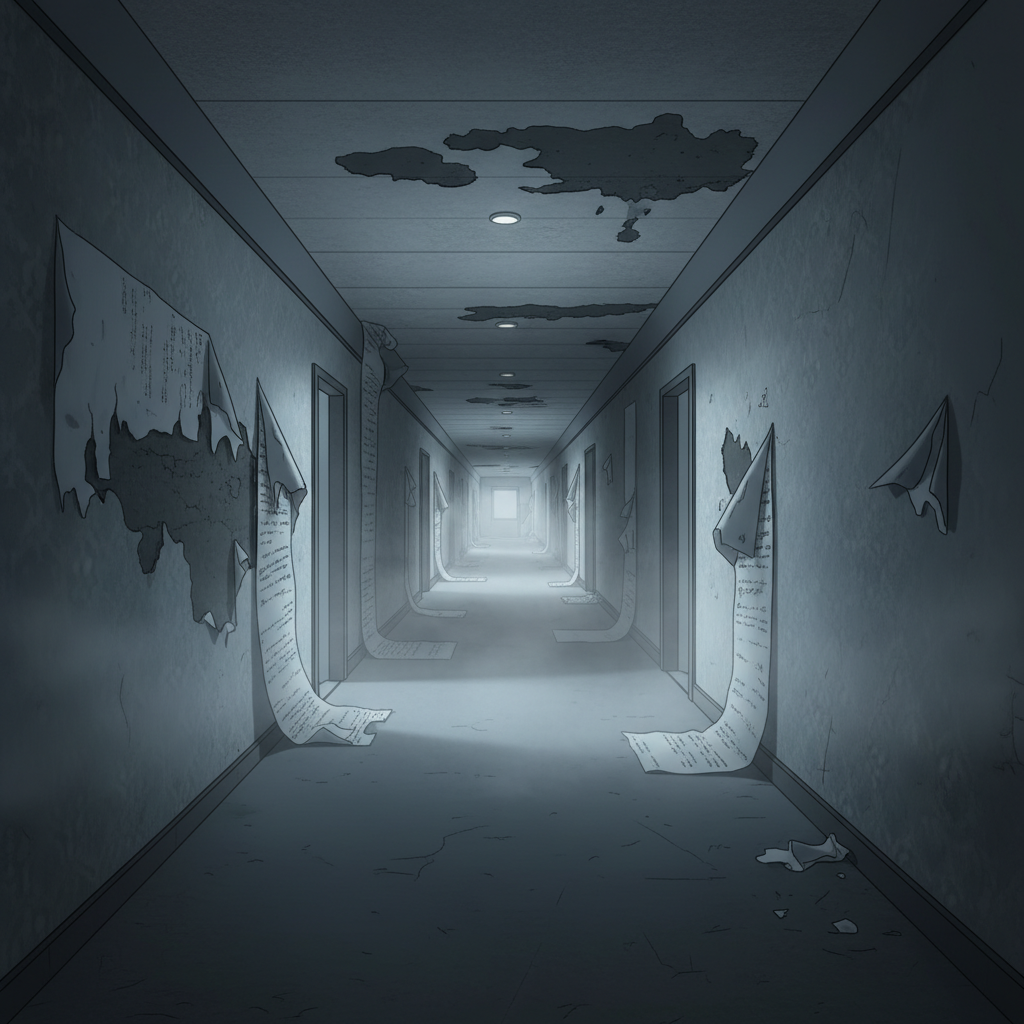
This guide breaks down what “deep narrative” actually means in horror games, how to tell whether a game’s story will work for you, and a practical way to play so you don’t miss the emotional beats. I’ll also flag common pitfalls, because some “narrative” horror is really just lore dumps taped to combat.
What “deep narrative” means in psychological horror (beyond lore)
People say “deep narrative” when they mean a few different things, and horror games mix them in messy ways. In practice, depth usually shows up through how the story is delivered, not how many pages of notes you can collect.
- Unreliable perspective: the game makes perception part of the conflict, so you question memory, time, identity, or intent.
- Theme-driven scares: fear supports an idea (grief, guilt, isolation), rather than random “boo” moments.
- Character interiority: you learn who someone is through behavior, environment, and choices, not exposition.
- Cause-and-effect storytelling: mechanics and narrative reinforce each other, so your actions feel meaningful.
According to the American Psychological Association, fear and anxiety responses are shaped by interpretation and context, not only by the stimulus itself. Narrative-heavy horror leans into that: it lets your brain do extra work, which often creates stronger tension than a single loud trigger.
Why narrative-driven psychological horror hits different
There’s a reason many players call certain titles “stressful but addictive.” The best psychological horror games narrative designs often create dread through anticipation and ambiguity.
- Ambiguity creates participation: you fill gaps with your own worst-case story, which can feel personal fast.
- Slow escalation: small inconsistencies stack up, so the world feels increasingly untrustworthy.
- Moral discomfort: you’re not just scared of dying, you’re scared of what you might do to survive.
- Reframing: a later reveal changes how earlier scenes read, making the story “stick.”
That last point matters if you want replay value. A jump-scare game can be “solved,” but a narrative horror game can be re-read.
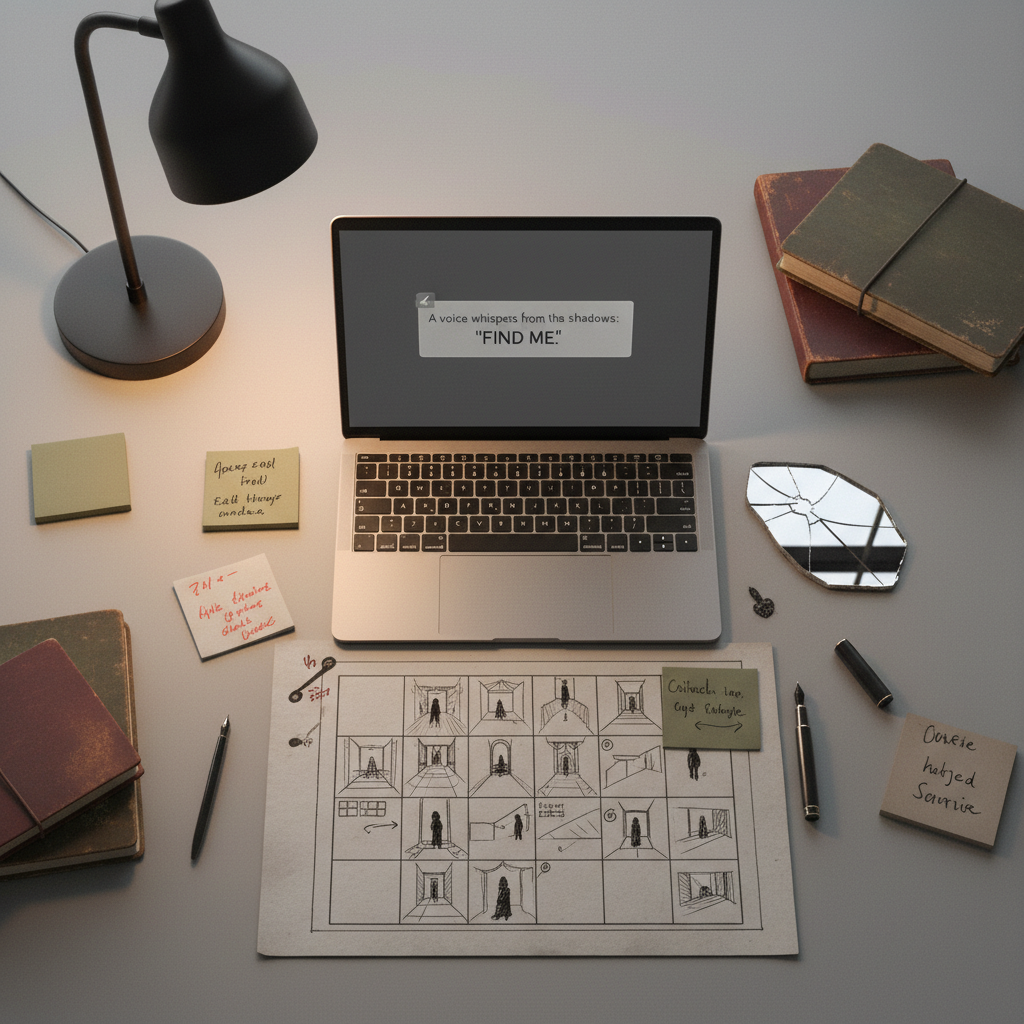
One more reality check: “narrative” does not always mean “linear.” Plenty of effective horror uses fragmented scenes, but it still feels coherent because theme and emotional logic stay consistent.
Common narrative structures you’ll see (and what they do to you)
When you know the structure, you can predict the kind of unease a game aims for. Not to spoil it, but to choose intentionally.
Unreliable narrator / unreliable world
This format makes you doubt the camera, the UI, the environment, sometimes even the menu. It’s great for paranoia, but it can frustrate players who want “fair” rules.
Memory reconstruction
You piece together events through environments, artifacts, and repeated motifs. It often ties fear to grief or guilt, and it rewards careful exploration.
Descent and confinement
The setting tightens, choices narrow, and you feel trapped psychologically even when the map is wide. This structure tends to pair well with resource scarcity and “no safe room” design.
Social horror and manipulation
Instead of a monster, the threat is coercion, gaslighting, or institutions. It can feel extra sharp if you’ve lived through controlling dynamics, so it’s a good place to respect your own limits.
Quick self-check: will this kind of story horror work for you?
If you want a fast filter before you buy, use this checklist. You don’t need perfect “yes” answers, but patterns matter.
- You enjoy stories where not everything gets explained, and you’re okay sitting in uncertainty.
- You tend to remember atmosphere, dialogue, and symbolism more than boss fights.
- You’re willing to read environmental cues, not just quest markers.
- You can tolerate slow pacing if the tension feels intentional.
- You prefer fear that builds over time, rather than constant spikes.
If you answered “no” to most, that’s not a flaw. You might simply like action-horror more, where the fear comes from pressure and speed, not ambiguity.
How to pick a story-rich psychological horror game (practical criteria)
Store pages can be misleading, so focus on signals that typically correlate with strong storytelling.
A fast comparison table
| What you want | Look for (signals) | Watch out for |
|---|---|---|
| Character-driven dread | Strong voice acting, consistent POV, reviews mentioning “emotion” or “guilt” | Endless lore notes with no character arc |
| Mind-bending uncertainty | Talk of shifting environments, reality distortion, unreliable narration | “Random” twists that don’t connect to theme |
| Meaningful choices | Multiple endings tied to behavior, not just a final button prompt | Fake choices that only change a cutscene |
| Slow-burn atmosphere | Sound design praise, pacing described as “patient” or “creeping” | Padding: backtracking with nothing new |
Three quick “store page” checks
- Mechanics match theme: if the story is about helplessness but the game is a power fantasy, tension can collapse.
- Content warnings exist: not a guarantee of quality, but usually a sign the devs thought about impact.
- Players describe feelings, not features: “I felt watched” tells you more than “great graphics.”
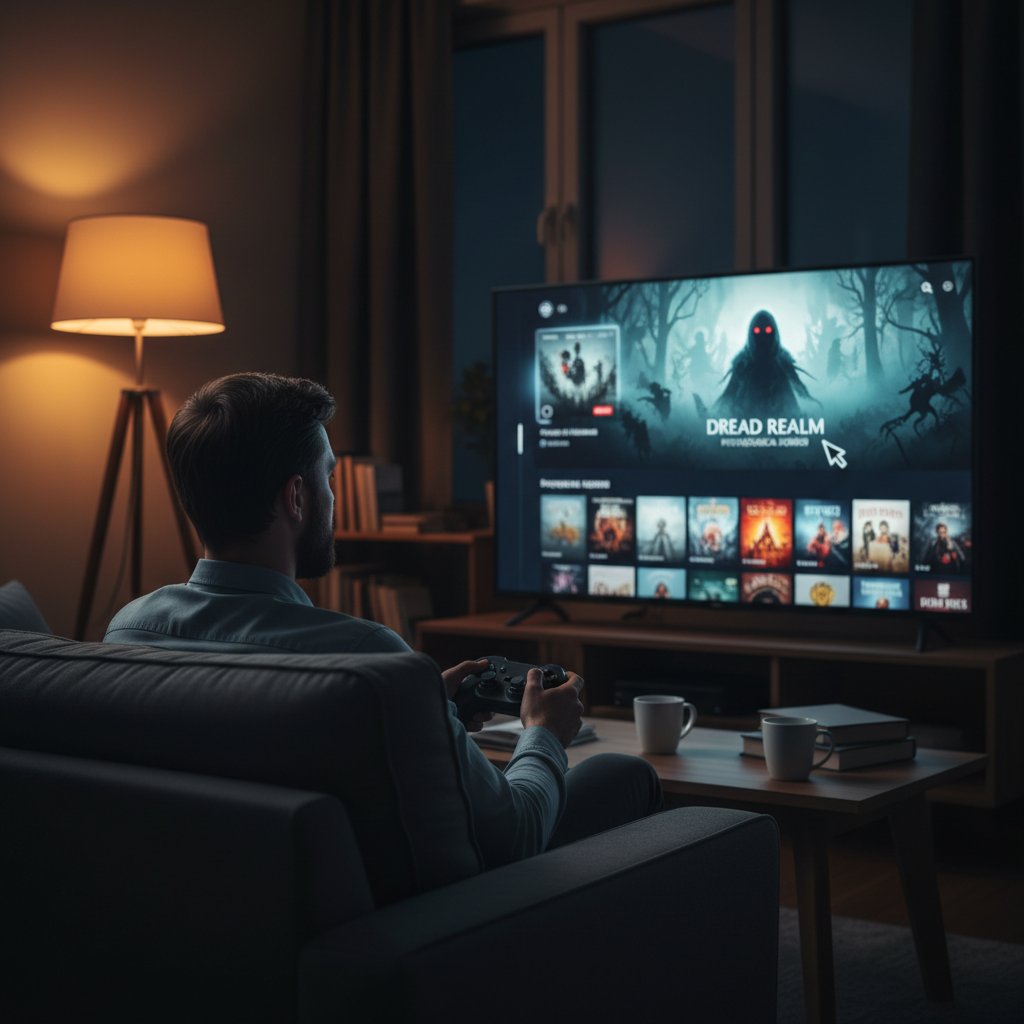
One more thing people underestimate: your platform and play setup. Headphones can dramatically change how you read a scene, and in many narrative horror games, audio cues carry as much story as dialogue.
How to play for narrative depth (without turning it into homework)
If you want the story to land, you don’t need to document every clue, but a few habits help.
- Commit to a “no multitasking” window: even 30–45 minutes. Deep narrative horror relies on mood continuity.
- Pause after major reveals: a short break helps you notice what changed in the environment or tone.
- Use in-game journals sparingly: check them when confused, not after every pickup.
- Let silence work: turning music to zero can reduce impact if the game uses it as misdirection.
- Make one intentional choice style: play “compassionate,” “self-preserving,” or “curious,” then see how the story reacts.
This is where psychological horror games narrative shines: you’re not only reacting, you’re interpreting, and the game quietly tracks who you are becoming.
Common mistakes that flatten the story (and how to avoid them)
A lot of disappointment comes from mismatched expectations. Here are the traps I see most often.
- Chasing completion on a first run: hunting every collectible can break tension and make scenes feel mechanical.
- Assuming confusion equals depth: sometimes it’s just unclear writing, and it’s okay to call that out.
- Skipping dialogue “because horror”: in this subgenre, dialogue often functions as threat assessment.
- Over-relying on spoilers to feel safe: a small spoiler can remove the exact uncertainty the narrative built.
According to the Entertainment Software Rating Board (ESRB), ratings and content descriptors can help you anticipate intensity. If you know certain themes hit too close to home, reading descriptors before buying can save you a rough night.
When to step back or ask for help
Psychological horror can be intense in a way that feels “sticky” after you quit. If you notice lingering anxiety, sleep disruption, or intrusive thoughts, stepping away makes sense, and talking to a licensed mental health professional can be a good option. That’s especially true if a game touches trauma-adjacent themes for you.
There’s no trophy for pushing through. The best psychological horror games narrative experiences come when you feel challenged, not overwhelmed.
Key takeaways and a simple next step
- Deep narrative in horror means theme, perspective, and mechanics working together, not just extra lore.
- Pick games based on the type of unease you want: ambiguity, moral pressure, memory, or manipulation.
- Play in a way that protects mood continuity, and avoid completionist habits on run one.
If you want a practical next step, choose one game you already own that’s known for story, then give it two uninterrupted sessions with headphones and minimal spoilers. You’ll know quickly whether narrative horror is your lane.
FAQ
What makes a psychological horror story “deep” instead of just confusing?
Depth usually shows up when confusion has a purpose: it reinforces theme, character, or a consistent idea about reality. If scenes feel random and don’t build toward an emotional truth, it might be muddled rather than layered.
Are psychological horror games narrative experiences always slow?
Often they’re slower than action-horror, but not always. Some keep brisk pacing while still using uncertainty and character tension; the difference is that stakes come from meaning, not only from damage numbers.
How can I avoid missing important story details?
Focus on recurring symbols, shifts in environment, and changes in how characters speak to you. If you catch those, you can miss a few notes and still understand what the game is doing.
Do multiple endings automatically mean better narrative?
Not automatically. Multiple endings matter when they reflect your behavior across the whole game, not just a last-minute selection. The best ones feel like consequences, not alternate cutscenes.
Is it normal to feel unsettled after playing story-heavy horror?
Yes, many people feel keyed up after intense suspense. If the feeling lingers or starts affecting sleep or daily functioning, taking a break is sensible, and professional support may help.
What should I look for in reviews if I want narrative-first horror?
Look for players describing emotion, interpretation, and pacing. When reviews talk about “themes,” “character,” “ambiguity,” and “atmosphere” more than weapons and enemies, you’re closer to narrative-first design.
Can I enjoy this subgenre if I hate jump scares?
Usually, yes, but it varies by game. Many narrative-focused titles use fewer jump scares and lean on dread, yet some still sprinkle sharp moments, so checking spoiler-free content notes is worthwhile.
If you’re trying to find psychological horror games narrative titles that fit your taste, it often helps to describe what kind of dread you want and what you want to avoid, then narrow to two or three games instead of browsing endlessly. If you need a more efficient shortlist, a simple questionnaire-style recommendation can save time without spoiling the experience.