
dark souls 3 best pvp builds usually come down to one thing: can you consistently win neutral and cash out damage before latency, spacing, and panic rolls turn the fight into a coin flip.
If you have ever copied a “top build” and still felt flimsy, you are not alone. A lot of guides list gear, but skip the parts that actually decide PvP outcomes: poise breakpoints, stamina budgeting, roll-catching rhythm, and what your build does when your first plan fails.
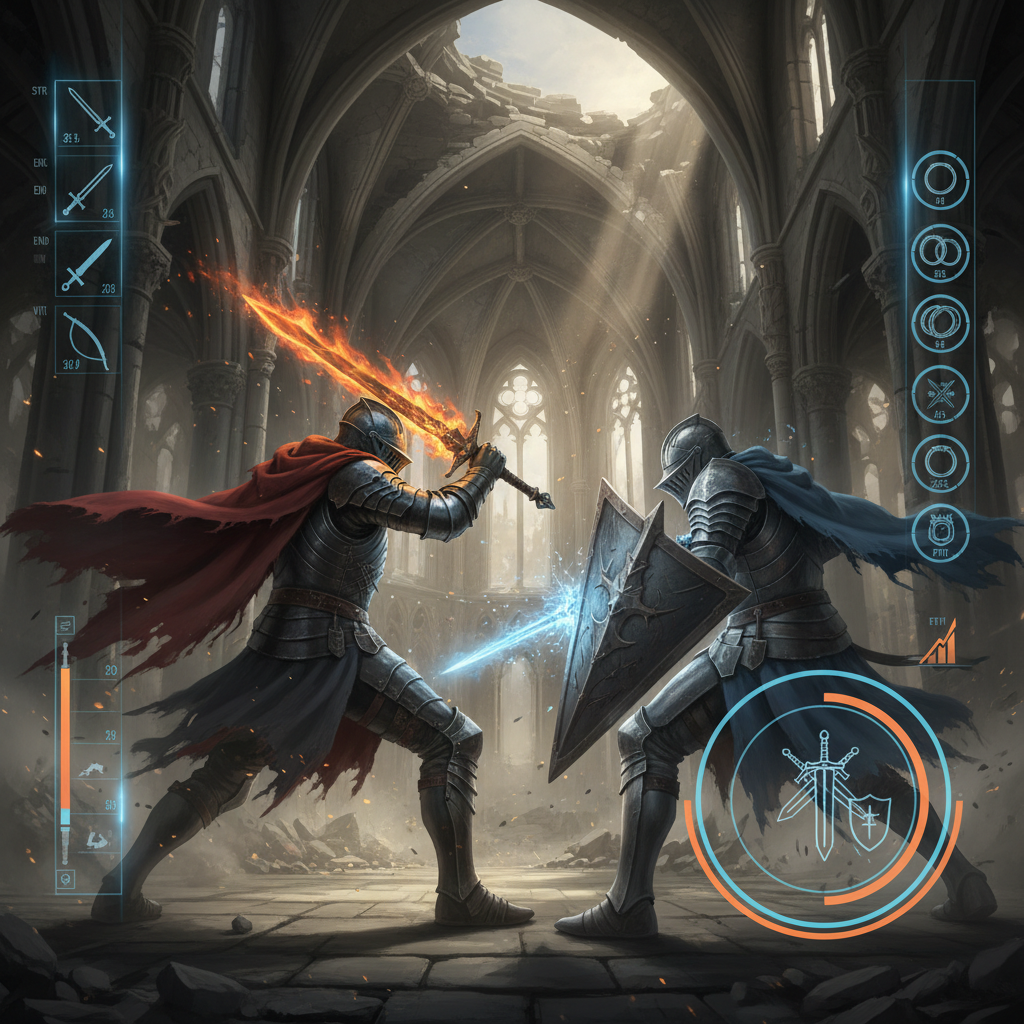
This guide focuses on practical, repeatable PvP setups for duels and invasions, plus quick checks to see which archetype fits your habits. I will also call out common traps, because “meta” on paper can play terribly in real hands.
What actually makes a PvP build “best” in DS3
In practice, “best” rarely means highest AR. It means your build keeps pressure without running out of stamina, survives a bad trade, and has at least one reliable way to close a round.
According to FromSoftware, online play uses asynchronous network matchmaking and can include latency and desync; in plain terms, you want forgiving movesets and clear win conditions that still work when timing feels slightly off.
- Consistency over peak damage: roll-catches, safe pokes, and fast recovery win more fights than one big combo you never land.
- Reasonable survivability: enough Vigor and absorptions to live through a mistake, especially in invasions.
- Stamina discipline: you need endurance to swing, chase, and still roll once.
- Simple pressure tools: straight sword R1s, curved sword running attacks, spear pokes, quickstep, or a strong weapon art.
Key takeaway: a “best” build is the one you can pilot under pressure, not the one that looks strongest in a spreadsheet.
Quick self-check: pick the build that matches your playstyle
Before you lock stats, answer this honestly. Most players lose time because they build for a playstyle they do not actually enjoy.
- You like clean fundamentals (spacing, whiff punishes): quality straight sword or spear.
- You like constant aggression (roll-catch loops): curved sword, katana, or dagger offhand setups.
- You like trading (you are fine taking a hit to deal one): greatsword / ultra with poise-focused armor.
- You like mixups and tools (chip, buffs, ranged): faith buffs, pyromancy hybrid, or dark infusion.
- You invade a lot (outnumbered scenarios): survivable regen, fast swaps, and reliable burst for finishing.
If two options fit, choose the simpler one first. A “good enough” setup you master beats a complicated setup you second-guess.
Build cheat sheet table (SL 120-ish friendly)
Below is a practical snapshot of popular archetypes. Exact min-max varies by weapon choice and whether you prioritize duels or invasions, so treat the numbers as targets, not commandments.
| Build archetype | Best for | Stat focus | Typical weapons | Notes |
|---|---|---|---|---|
| 40/40 Quality | Learning, duels | VIG + END, 40 STR / 40 DEX | Straight swords, spears, greatswords | Wide weapon variety, easy swaps, very stable. |
| Sharp DEX | Pressure, chase-down | VIG, END, 60–80 DEX | Curved swords, katanas, thrusting swords | Great roll-catch tools, relies on clean stamina use. |
| Heavy STR | Trading, intimidation | VIG, VIT, 60–66 STR | Greatswords, ultras, greataxes | Wins on reads and hyperarmor, can feel slow vs good spacing. |
| Dark/Chaos Hybrid | Versatility, chip | INT/FTH split, VIG | Dark-infused weapons, pyros | Strong vs shields and mixed defenses, needs stat planning. |
| Faith Buff (Lightning) | Explosive rounds | FTH, ATT, VIG | Buffable straight swords, spears | Very scary during buff windows, weaker when buff down. |
Five reliable PvP builds (with practical setups)
These are not the only viable options, but they map well to what most players can execute consistently. Each one has a clear plan for neutral, pressure, and finishing.
1) Quality (40/40) Straight Sword + Offhand tool
This is the “I want answers for everything” setup. It fits duels and still works in invasions because you can swap weapons without rebuilding.
- Stats: prioritize Vigor first, then Endurance, then hit 40 STR / 40 DEX.
- Weapons: a straight sword as main, with an offhand that adds a layer, like a crossbow for chip or a parry tool if you are comfortable.
- How it wins: safe R1 pressure, spacing, and punish windows, plus swaps for matchups.
- Finisher habit: when you get a hit, expect the panic roll and chase with a running attack instead of swinging until empty.
2) Sharp DEX Curved Sword (roll-catch focused)
If you watch good duelists, you will see a lot of “one hit into chase.” Curved swords enable that rhythm with great running attacks and quick recovery.
- Stats: higher DEX with enough END to run down rolls, keep equip load comfortable so your movement feels crisp.
- Weapons: curved sword main, optional thrusting sword or dagger swap for tight corridors.
- How it wins: consistent roll-catches, stamina-safe pressure, and whiff punishes.
- Common mistake: over-chasing into latency, you swing “on prediction” too early and eat a trade.

3) Heavy STR Greatsword/Ultra (hyperarmor trades)
This build shines when you accept trades on your terms. In real matches, people panic when they cannot stagger you easily.
- Stats: STR to the common PvP ceiling, solid Vigor, and enough Vitality for armor that supports trading.
- Weapons: a greatsword or ultra, plus a faster backup for tight matchups.
- How it wins: bait a light hit, swing through with hyperarmor, then roll-catch the escape.
- Reality check: versus disciplined spacing, you may need patience, do not “fish” with unsafe swings.
4) Dark/Chaos Hybrid (weapon + spell threat)
This is a strong answer when you want pressure that does not rely only on melee. Dark/chaos setups often punish predictable shield play and force reactions.
- Stats: split investment into INT and FTH, keep Vigor healthy so you do not fold during cast attempts.
- Weapons: dark-infused straight sword or greatsword, plus a catalyst for utility spells.
- How it wins: chip damage, stagger pressure, and forcing rolls with ranged threat, then punishing the roll.
- Common mistake: casting at bad ranges, you burn stamina and give up neutral for nothing.
5) Faith Buff (Lightning) Duelist (timed power spike)
Buff builds are not “always on,” but during the window they feel unfair if you manage spacing. The tradeoff is you must plan around downtime.
- Stats: enough Attunement for your buff and a utility slot, strong Faith, Vigor not neglected.
- Weapons: buffable straight sword or spear, keep a non-buff fallback for when you cannot safely rebuff.
- How it wins: control neutral, get a safe buff moment, then pressure hard until the opponent breaks.
- Reality check: in invasions, buffing can be a luxury, do it after a reset, not mid-chaos.
Practical setup steps (so your build feels good in real matches)
People ask for “the stats,” but the build starts feeling right when your rings, armor weight, and stamina pattern match your weapon.
- Step 1: Set a survivability floor: if you keep dying to two clean hits, add Vigor before chasing damage numbers.
- Step 2: Decide your pressure tool: running attacks, quickstep, weapon art, or spells, pick one and practice it.
- Step 3: Tune equip load: if your rolls feel sluggish, lower weight; if trades fail, consider heavier armor for your plan.
- Step 4: Build a swap list: one main weapon, one fast weapon, one ranged option, one finisher option.
- Step 5: Practice one “round script”: open with safe poke, confirm hit, chase roll, reset stamina, repeat.
For most players chasing dark souls 3 best pvp builds, this is the missing piece: the build is also your habits, not only your gear.
Common mistakes that make “best builds” feel weak
- Over-investing in damage early: you end up dying before your extra AR matters.
- No plan for shields: if your setup cannot threaten a turtler, you will overextend and get punished.
- Stamina greed: three swings sound fine, until you cannot roll once and lose the round.
- Copying a duelist build for invasions: in 1v2 or 1v3, you need survivability, escape routes, and burst.
- Forcing parries: parry fishing looks cool, but missing once in latency-heavy fights can cost everything.
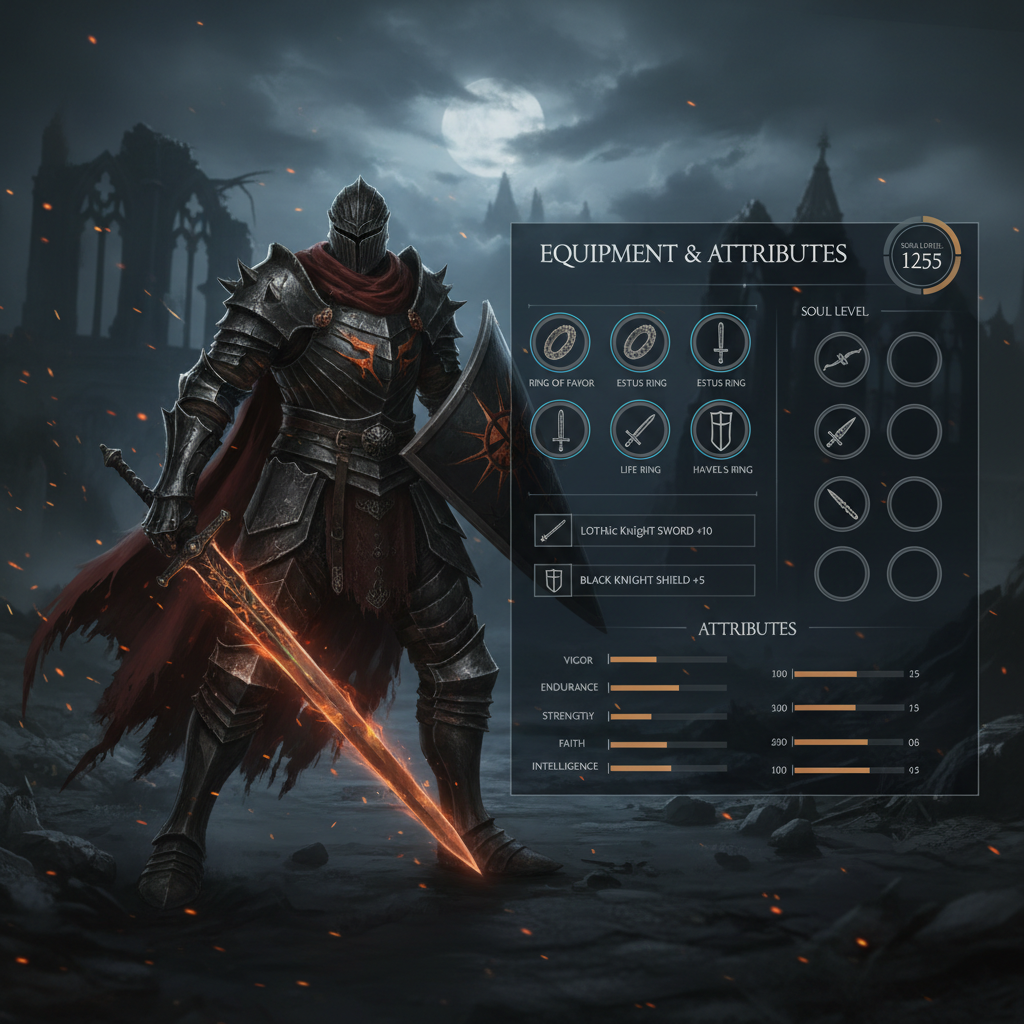
When to get more specific (matchups, SL, or platform quirks)
At some point, generic advice stops helping. If you play a lot of arena duels, tiny optimizations matter; if you mainly invade, tool coverage matters more.
- If you keep losing mirror matchups: record a few fights and check whether you lose neutral or lose conversions after a hit.
- If you play on a laggier connection: favor simpler movesets and safer confirms, avoid tight reaction-dependent combos.
- If your SL differs: the same archetype works, but you may have to drop secondary stats, not Vigor.
- If you are unsure on infusions: test on a few common opponents and adjust, a good feel test beats theoretical perfection.
If you want truly optimized recommendations, it can help to ask experienced PvP players for a critique of your exact weapon, rings, and SL, since small changes can shift breakpoints.
Conclusion: the “best” build is the one you can repeat under stress
dark souls 3 best pvp builds are less about a secret weapon and more about a reliable loop: survive mistakes, win neutral, convert one hit into pressure, then finish clean.
If you only do two things after reading, do these: pick one archetype that matches your instincts, then practice a single roll-catch or whiff-punish pattern until it becomes automatic. Your win rate usually rises before your build even feels “fully done.”
FAQ
What is the most beginner-friendly PvP build in Dark Souls 3?
Quality (40/40) with a straight sword is often the easiest to learn because it has safe attacks and flexible weapon swaps, so mistakes feel less fatal.
Are dark builds still good for PvP, or are they outdated?
Dark setups can still be very effective, especially when opponents rely on shields or predictable defense, but they demand better stat planning and discipline around casting.
How much Vigor do I need for PvP at SL 120?
It varies by comfort level and invasion vs duel focus, but if you regularly die in two clean exchanges, that is a strong sign you should raise Vigor before adding damage.
Which weapons are best for roll-catching in DS3 PvP?
Curved swords and some thrusting options are popular because their running attacks and recovery support chase pressure, though you still need timing that respects latency.
Should I build for poise in PvP?
If you plan to trade with greatswords or ultras, poise-friendly armor can matter a lot; if you play a light, whiff-punish style, you may get more value from speed and stamina.
Is a buff build worth it in invasions?
It can be, but buffs are easiest when you can create a reset. In messy invasions you often need a solid unbuffed fallback and a plan to disengage safely.
How do I know if my build is the problem or my fundamentals?
If you frequently run out of stamina, miss punishes, or swing into obvious baits, fundamentals likely hold you back more than stats. If you consistently outplay neutral but cannot finish rounds, your setup may lack a finisher tool.
If you are testing dark souls 3 best pvp builds and want a more “plug in and play” path, share your current SL, main weapon, and whether you duel or invade more, then you can narrow to one archetype and tune rings, infusions, and swap options without rebuilding from scratch.