
best vr games for couples 2026 is really a search for one thing: a co-op night that feels fun, not fiddly, nauseating, or quietly competitive in the worst way. The “best” game depends less on hype and more on how you two actually play, whether you share one headset, whether either of you gets motion sick, and if you want teamwork, flirting, laughter, or a little rivalry.
If you have ever spent half a date night troubleshooting party chat, arguing over comfort settings, or realizing a “co-op” game is basically parallel solo play, you are not alone. VR is amazing for couples, but it punishes the wrong fit fast, especially in small apartments, with mixed skill levels, or with one person who is new to gaming.
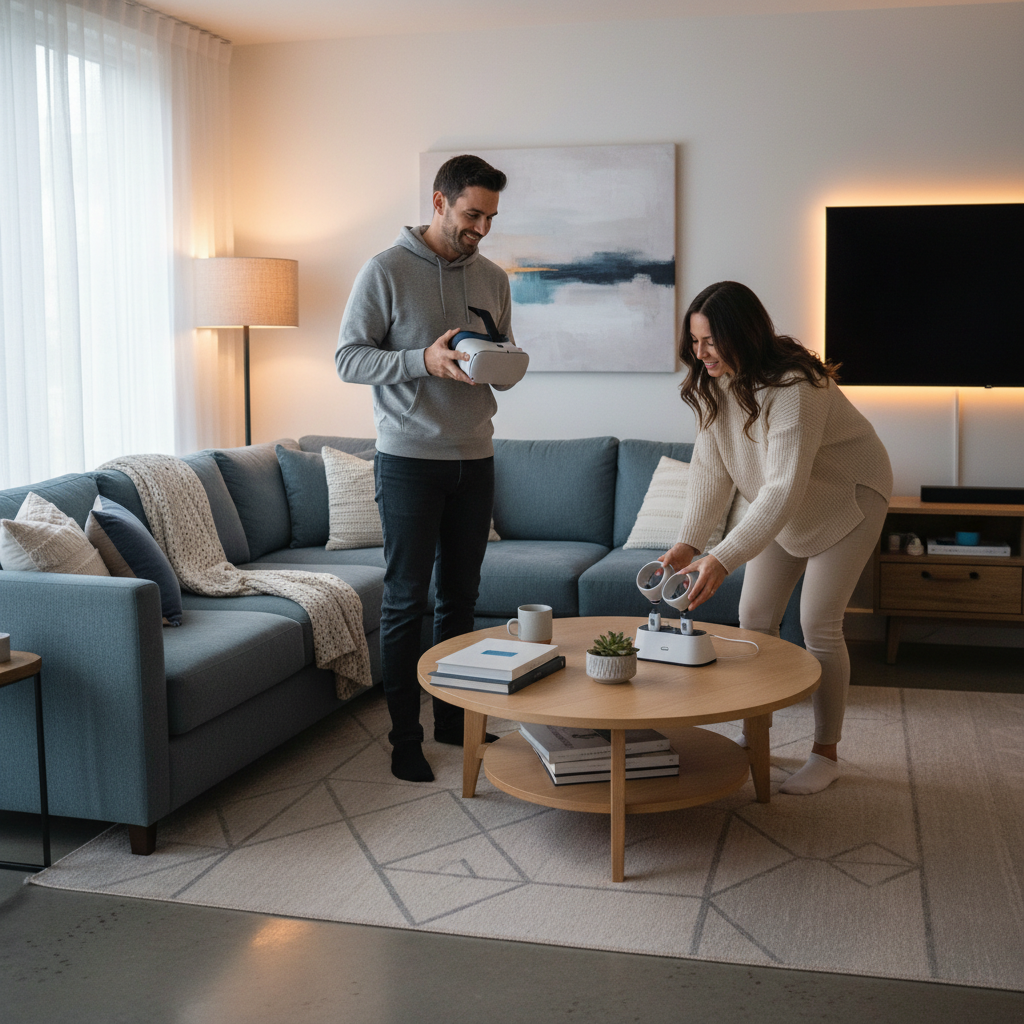
This guide narrows down what tends to work for couples in 2026, plus a quick way to pick based on your vibe. I also include practical setup tips because, honestly, comfort and friction matter as much as the game choice.
How to choose VR games as a couple (the stuff that actually matters)
When people ask for the best vr games for couples 2026, they often mean “games we will both enjoy.” That usually comes down to a few make-or-break factors that game store pages do not highlight.
- Comfort level: Teleport movement and stationary play reduce nausea for many people, while smooth locomotion can be rough for newcomers.
- Communication load: Some co-op games require constant callouts, others are more “cozy parallel” where you chat naturally.
- Skill gap tolerance: Asymmetric co-op lets one person lead without the other feeling dragged.
- Space and noise: Room-scale can be magical, but it is also the fastest path to bumped furniture.
- One headset vs two: Two-headset co-op is ideal, but there are good “pass-and-play” options too.
According to the American Academy of Ophthalmology, it is reasonable to take breaks during visually demanding screen use to reduce eye strain. In VR, that “break” also helps with comfort and heat buildup, so build it into the night rather than waiting until someone feels awful.
Quick picks table: best options by couple vibe
If you do not want a long debate, start here. These are widely known, couple-friendly choices that tend to be easy to recommend because they support teamwork, clear goals, and repeatable sessions.
| Couple vibe | Good picks | Why it works | Comfort notes |
|---|---|---|---|
| Laughing, light competition | Walkabout Mini Golf, Beat Saber (multiplayer) | Easy to learn, fast rounds, great banter | Generally comfortable, mostly stationary |
| True teamwork | Keep Talking and Nobody Explodes, Demeo | Communication feels like a “team” not two solos | Low motion, good for beginners |
| Cozy, low pressure | Puzzling Places, Tetris Effect: Connected | Relaxed pacing, easy to chat while playing | Very comfortable for most players |
| Story and adventure | Escape Simulator (VR), The Room VR | Puzzles create natural “us vs game” energy | Usually comfortable, watch movement settings |
| Spicy rivalry (friendly) | Eleven Table Tennis, Blaston | Skill expression, quick rematches | Active, may need more space |
Best VR games for couples 2026: reliable co-op and date-night favorites
Below are solid “default” picks. I am not claiming these are the only good games, but in many households they are the ones that actually get reopened, not just purchased.
Walkabout Mini Golf
Mini golf in VR is a near-perfect couples format: short holes, lots of “your turn, my turn” rhythm, and conversation never feels like a distraction. It is also friendly to mixed skill levels because the skill ceiling is there, but you can still have a great time playing casually.
Keep Talking and Nobody Explodes
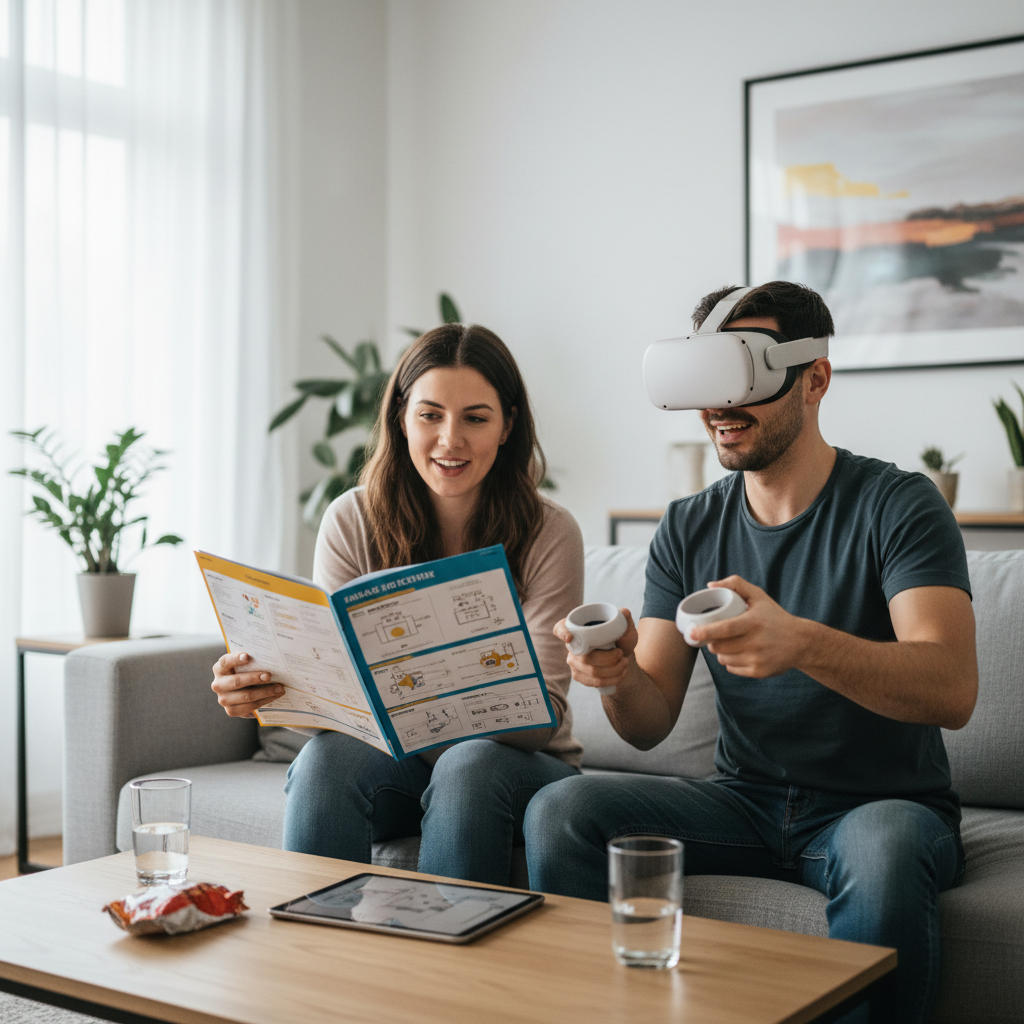
This is the classic asymmetric co-op: one person in VR defuses a bomb, the other reads a manual outside VR. It is great for couples who like problem solving and playful pressure, and it also works when you only have one headset.
Demeo
If you want something “board-game night, but faster,” Demeo is a strong choice. It rewards planning together, it is not twitchy, and it avoids the awkwardness where one player carries the action while the other watches.
Beat Saber (multiplayer)
Beat Saber is not romantic in the traditional sense, but it is a great shared ritual. You can warm up together, compare scores, and swap song packs based on mood. For couples, the win is how quickly it gets you from zero to fun.
Puzzling Places
This is the “calm date” option: 3D jigsaw puzzles that feel surprisingly tactile. It is excellent if one partner prefers relaxed pacing, and it pairs well with conversation and music in the background.
Escape room and puzzle adventures (Escape Simulator VR, The Room VR)
Puzzle-driven games tend to create the best couple energy because you are collaborating naturally, trading theories, and celebrating small wins. If you argue in escape rooms in real life, pick a lighter puzzle game first and keep sessions short.
If you have one headset: date-night formats that still feel fair
One-headset couples often get stuck because many co-op games assume two players in VR. You can still make it work, but choose formats that do not turn into one person playing while the other scrolls their phone.
- Asymmetric co-op: Keep Talking and Nobody Explodes is the obvious pick because both roles matter.
- Pass-and-play rounds: Mini golf holes, rhythm-song attempts, table tennis sets, short puzzle chapters.
- Coaching mode: One person in VR, the other acts as navigator, timekeeper, or clue tracker, then swap.
Small tip that saves the mood: agree on a swap rule before you start, like “every 10 minutes” or “after each level,” so you do not negotiate while someone is sweating in the headset.
Comfort and safety: make the night smoother (and less nauseating)
Comfort is not a side note, it is often the difference between “we should do VR again” and “never again.” Motion sickness varies a lot by person, and even experienced players can feel off on a bad day.
- Start with comfortable locomotion: teleport movement, snap turning, seated or stationary modes.
- Use a fan: airflow can reduce overheating and may help some people feel steadier.
- Set a break cadence: 10–20 minutes early on, longer sessions later if both feel fine.
- Clear the play space: remove coffee tables, cables, pet toys, and anything shin-height.
- Stop on “early warning” signs: dizziness, cold sweat, headache, eye strain, or disorientation; if symptoms persist, it is sensible to consult a healthcare professional.
According to the U.S. Consumer Product Safety Commission, many home injuries come from everyday hazards and falls. VR adds a vision blocker to the mix, so treat your space setup like part of the game, not an afterthought.
Practical setup for couples: audio, boundaries, and “no friction” rules
Most VR date nights go sideways for boring reasons: someone cannot hear, casting fails, or one partner feels judged. A couple of quick policies helps more than buying more accessories.
- Decide your vibe: Are you bonding, training, or competing? Pick one for the night.
- Use casting on a TV: The non-VR partner stays engaged, and it reduces “what are you doing in there?” confusion.
- Agree on competitiveness: If one person hates getting crushed, choose co-op or handicap the better player.
- Keep a comfort “pause word”: No debate, you just switch games or take a break.
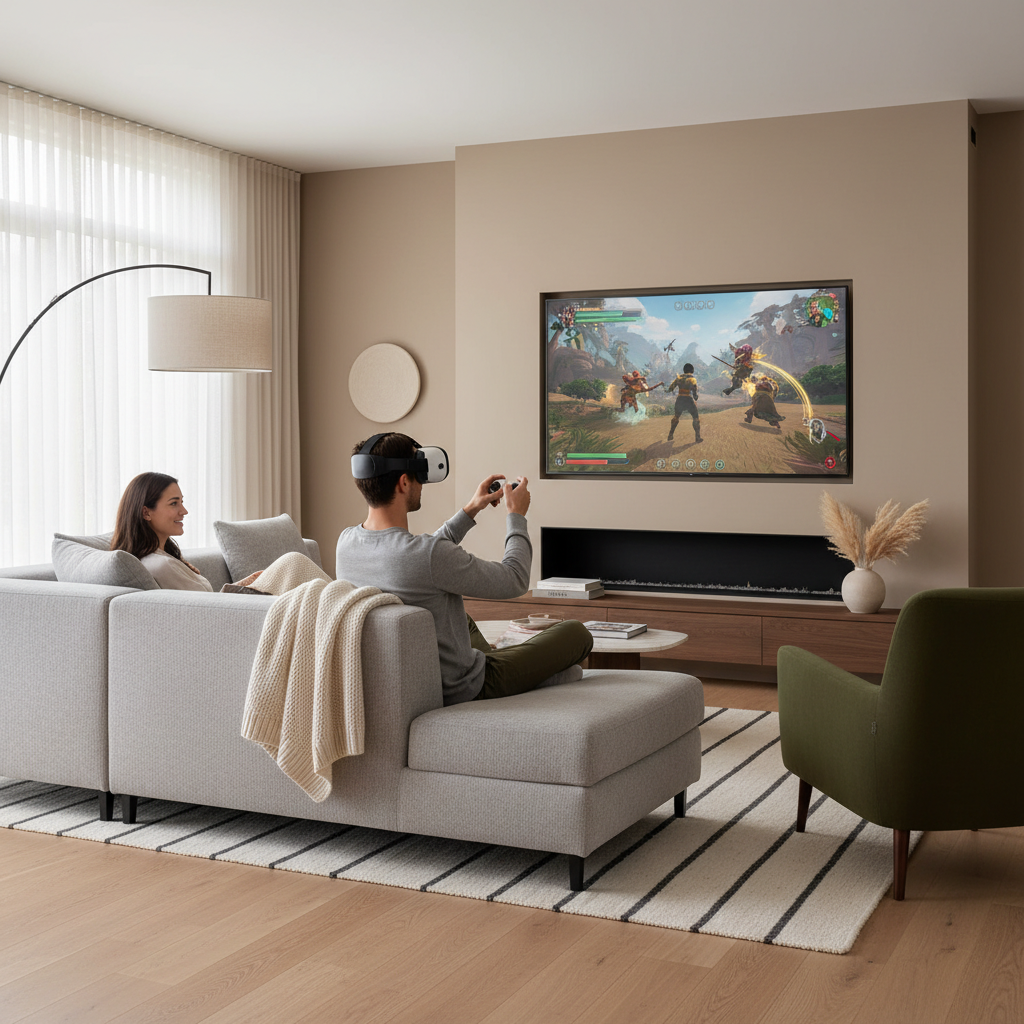
Key takeaways: Pick for comfort first, then for teamwork, then for genre. If you do that, even “simple” games become great couple memories, while flashy intense titles stop feeling like a gamble.
Conclusion: a simple way to pick your next VR date-night game
The best vr games for couples 2026 are the ones that match your real-life rhythm: how you talk, how competitive you get, how much time you want to spend setting things up, and how your body handles motion. If you want the safest starting point, go with Walkabout Mini Golf for laughs, Keep Talking and Nobody Explodes for teamwork on one headset, or Demeo for a longer co-op session that still feels relaxed.
Pick one game for the night, set a 15-minute comfort check-in, and keep a second “backup” title ready in case the first choice does not land. That tiny bit of planning usually does more for the vibe than chasing the newest release.
FAQ
What are the best vr games for couples 2026 if one person is brand new to VR?
Start with low-motion, easy-to-understand games like Walkabout Mini Golf, Puzzling Places, or Keep Talking and Nobody Explodes. The goal is early wins and comfort, not intensity.
What if my partner gets motion sick in VR?
Choose teleport movement, snap turning, and seated or stationary titles, and keep early sessions short. If motion sickness is frequent or severe, consider asking a healthcare professional for personalized guidance.
Are there good couples VR games if we only own one headset?
Yes, but you need the right format: asymmetric co-op like Keep Talking and Nobody Explodes, or short-round games where swapping feels natural. Casting to a TV helps the non-VR partner stay involved.
What VR games feel more like “real quality time” and less like gaming?
Puzzle and “cozy” titles often work best because they leave room for conversation. Puzzling Places and escape-room style experiences tend to feel like doing an activity together, not grinding levels.
What are good competitive VR games for couples without causing arguments?
Pick games with short rounds and quick rematches, like Eleven Table Tennis or mini golf, and set a tone before you start. Many couples do better with “friendly best-of-three” than open-ended score chasing.
Do we need two headsets to play co-op VR together?
For many multiplayer VR games, yes, but plenty of couples still have a great time with one headset using asymmetric co-op or pass-and-play. If you are considering a second headset, make sure your top games actually support cross-play or the same platform.
How long should a VR date night be?
Many couples find 45–90 minutes is a sweet spot, with breaks. The right length depends on comfort, headset weight, and game intensity, so it is fine to keep it shorter and end on a high note.
If you are trying to plan a VR date night and want a more “plug-and-play” setup, it can help to pick two titles in advance, one cozy and one active, then build your routine around casting, comfort settings, and a simple swap rule so the night stays about each other, not troubleshooting.