
top games with holographic combat and abilities is a niche that sounds obvious until you try to shop for it, because a lot of “holograms” in games are really just UI tricks, neon effects, or one-off gadgets.
If you want the feeling of projecting tools into the air, weaponizing hard-light constructs, or outsmarting enemies with decoys and simulated tech, you need a tighter definition and a shortlist that respects how these systems actually play.
This guide focuses on games where holographic combat or abilities are more than decoration, they either shape moment-to-moment fights, enable stealth mind games, or become the core way you build, aim, and win. You’ll also get a quick self-check, a comparison table, and practical tips to make these mechanics click.
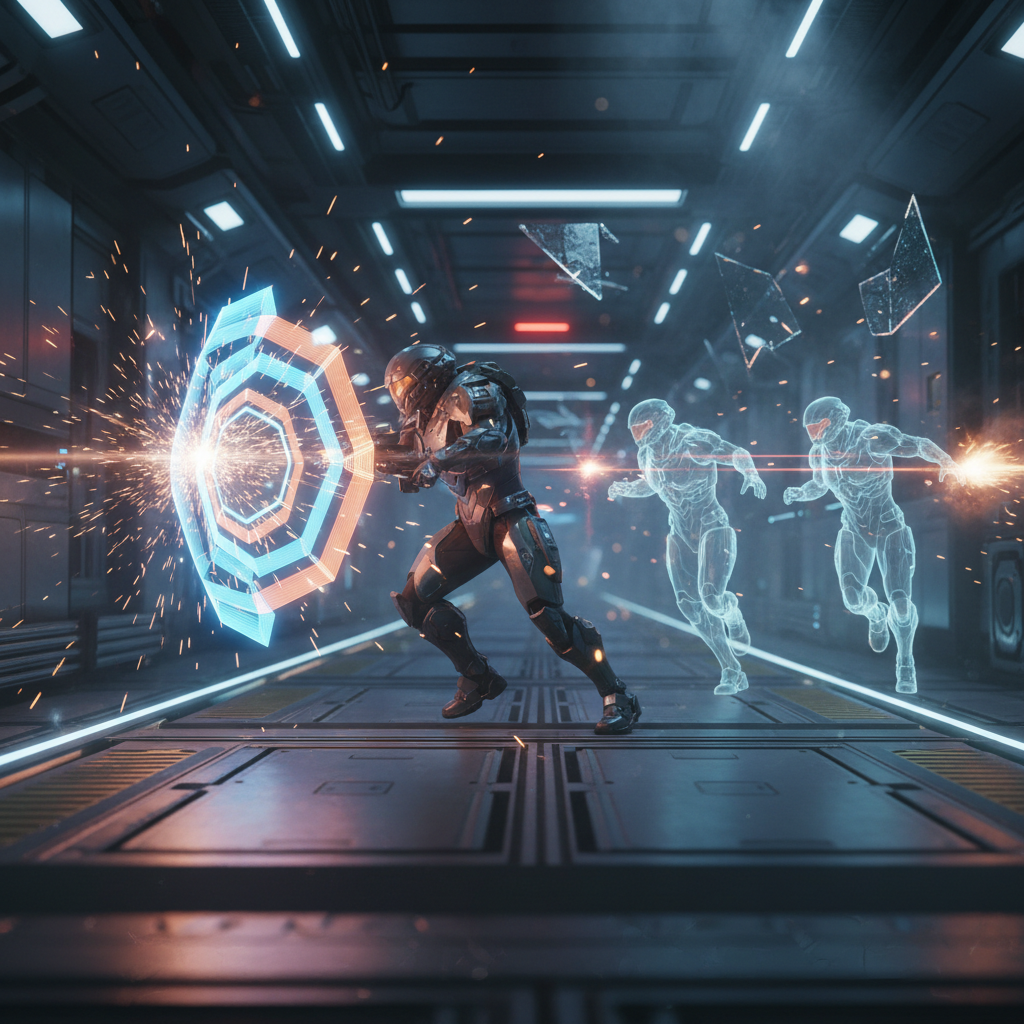
What “holographic combat” actually means (so you don’t get baited)
In practice, holographic combat and abilities usually show up in three patterns, and knowing which one you like saves a lot of time.
- Hard-light constructs: barriers, blades, platforms, or “solid holograms” that behave like real objects, often used for cover, area control, or mobility.
- Projection and deception: decoys, cloaking, fake footprints, projected avatars, and enemy misdirection, which turns fights into positioning puzzles.
- Tactical holographic interfaces: scanning, remote hacking, drone views, 3D maps, and AR overlays that change how you plan encounters, even if you still shoot conventional weapons.
A common mismatch is expecting “hologram powers” and getting a game where the only holographic element is the minimap. This list leans toward titles where holographic systems affect combat decisions, not just visuals.
Quick comparison: top picks at a glance
If you’re skimming, start here. These are well-known games in the U.S. market where holographic combat and abilities are either central or meaningfully integrated.
| Game | Holographic angle | Best for | Watch-out |
|---|---|---|---|
| Halo: Reach / Halo Infinite | Armor abilities, hard-light-style gear, decoys/shields depending on sandbox | Classic FPS with readable “sci-fi tool” combat | Not every Halo entry leans hard into holograms |
| Titanfall 2 | Pilot holo, cloak-style misdirection, tactical gadgets | Fast FPS movement + smart ability timing | Multiplayer population can vary by platform |
| Apex Legends | Mirage decoys, Seer-style scanning, ability-driven combat | Competitive squads, ability mind games | Live-service balance shifts over time |
| Mass Effect Legendary Edition | Omni-tool style projections, tech powers, tactical overlays | RPG builds that feel “future-tech” | More ability/RPG than “hologram-first” combat |
| Deus Ex: Mankind Divided | AR vision, scanning, smart cover play, augmented stealth | Stealth + tactical problem solving | Slower pace, choice-heavy missions |
| Destiny 2 | Light constructs, class abilities, techno-magic hybrid | Co-op shooters with flashy “constructed” powers | Content rotation can confuse returning players |

The top games with holographic combat and abilities (and why they work)
Titanfall 2
When people say they want holographic abilities that matter, they often mean deception under pressure, and Titanfall 2 nails that. Holo-style tools create real decision points: you bait shots, force bad peeks, and punish overconfident chases. The movement speed makes those moments feel earned instead of scripted.
- Why it fits: abilities influence micro-decisions every few seconds.
- Who it’s for: FPS players who like outplays, not just aim duels.
Apex Legends
Apex takes the same idea and stretches it into a team game where information and misdirection win fights. Mirage-style decoys are the obvious example, but the broader point is that scan, reveal, fake, reposition becomes a loop. If you want “holographic combat” as mind games, this is a strong pick.
- Why it fits: projection and detection are integrated into the meta.
- Who it’s for: squads that communicate and like tactical tempo.
Halo (especially entries with stronger equipment/ability sandboxes)
Halo’s best hologram-adjacent moments come from equipment that reads like hard-light tech, drop shields, deployables, and gadgets that reshape lines of sight. It’s not always labeled “holographic,” but it often scratches the same itch: use a futuristic tool, win a fair fight unfairly.
- Why it fits: clean readability, abilities stay understandable in chaos.
- Who it’s for: players who want sci-fi without ability overload.
Mass Effect Legendary Edition
Mass Effect is less about projecting a decoy mid-gunfight, more about building a character whose tech powers feel like omni-tool projections and battlefield manipulation. If your idea of top games with holographic combat and abilities includes combat tech + RPG builds, this belongs on the list.
- Why it fits: tech powers, crowd control, and tactical pausing make “future combat” feel deliberate.
- Who it’s for: players who want story and buildcraft alongside action.
Deus Ex: Mankind Divided
Deus Ex sells holographic-style gameplay through AR vision, scanning, and augmented stealth tools. The “combat” part can be loud, but the strongest use is often not shooting at all, it’s seeing the problem differently, then choosing the cleanest route.
- Why it fits: information abilities change how you approach encounters.
- Who it’s for: stealth fans who enjoy planning and improvising.
Destiny 2
Destiny sits in a hybrid space: some abilities feel like hard-light constructs, others like space magic with tech flavor. If what you want is the sensation of constructing power in your hands in co-op combat, it can deliver, especially when builds lean into ability uptime.
- Why it fits: flashy abilities, strong co-op loop, satisfying “power fantasy.”
- Who it’s for: players who like raids, strikes, and build tuning.
Self-check: which holographic style are you actually looking for?
Before you buy or reinstall anything, answer these quickly. Most disappointment comes from picking a game that supports the “wrong” hologram fantasy.
- I want to trick humans more than I want to melt AI: you likely want projection/deception games like Apex or Titanfall-style play.
- I want solid constructs such as shields, walls, or platforms: look for hard-light leaning kits and build-focused ability loops.
- I want a tactical HUD fantasy with scanning and planning: Deus Ex and tech-heavy RPGs will feel closer.
- I want co-op spectacle where abilities chain constantly: live-service shooters often fit, with the usual caveats.
If you said “all of the above,” that’s normal, but then your best move is choosing by pacing: do you want fast PvP, slower stealth, or RPG combat with builds?
How to get more out of holographic abilities (practical play tips)
These mechanics look flashy, but they pay off when you treat them like tools, not panic buttons.
- Use projection to steal attention, not to “win damage”: decoys work best when you already planned the angle you’ll take after the bait.
- Time your hologram with audio: many players track sound first; firing, sliding, or reloading can sell the fake.
- Make your ability create a question: “Is that the real push?” beats “Here is a glowing effect.” You want hesitation.
- Pair scan tools with restraint: if you reveal enemies but swing wide immediately, you often gift them the exact counter-peek they want.
- Build for uptime only if you can convert it: frequent ability use is great in PvE, but in PvP it can turn predictable.
One more thing people miss: if your favorite part is the holographic UI fantasy, consider playing with the HUD options and accessibility settings. Cleaner overlays can make AR-style abilities feel more “in-world,” while clutter can kill the vibe.
Common mistakes and small reality checks
Shopping for top games with holographic combat and abilities gets weird because marketing language is generous and players use “hologram” to mean different things.
- Confusing neon VFX with holography: bright sci-fi effects can look holographic, but may not behave like projections or constructs.
- Expecting stealth outcomes in a damage-first game: deception kits shine when the game rewards repositioning, not only DPS.
- Ignoring latency and visibility in PvP: a decoy that looks perfect on your screen may read differently to others, depending on netcode and settings.
- Assuming one character defines the whole game: some titles have one “hologram hero,” but the rest of the roster plays totally differently.
According to ESRB, ratings exist to help players understand content and themes before purchase, which matters here because many sci-fi shooters skew Mature and can include stronger violence or online interactions.
When it’s worth getting outside help (or at least better info)
If you’re buying for a kid or a shared family console, it’s smart to sanity-check online features and content controls. According to FTC, consumers should watch for in-game purchases and recurring charges, especially in free-to-play titles, because the “real cost” often comes later through cosmetics or battle passes.
If you’re sensitive to motion sickness, fast holographic UI overlays and quick camera movement can trigger discomfort. In that case, consider games with strong field-of-view and motion settings, and if symptoms persist, it may be worth asking a healthcare professional for advice that fits your situation.
Key takeaways
- Holographic combat usually means hard-light constructs, deception projections, or AR tactical interfaces, not just futuristic visuals.
- If you want mind games, start with Apex Legends or Titanfall-style ability play.
- If you want tech powers and builds, Mass Effect is often a better match than pure shooters.
- Use holographic abilities to create hesitation and bad information, that’s where the “wow” becomes wins.
Conclusion
Chasing holograms in games is really chasing a feeling: tools projected into the air that change the fight, not just decorate it. Pick your preferred flavor, deception, constructs, or AR tactics, then choose a game whose pace matches how you like to think under pressure.
If you want one action step, make a short list of two titles, then watch a few minutes of unedited gameplay focused on abilities rather than trailers. It’s the fastest way to confirm whether those holographic systems actually drive combat the way you imagine.
FAQ
What are the top games with holographic combat and abilities on console?
Console-friendly picks often include Halo entries with strong equipment sandboxes and ability-driven shooters like Apex Legends. The “best” one depends on whether you prefer PvP mind games or more straightforward sci-fi gunplay.
Are holographic abilities mostly a PvP thing?
Not necessarily. PvP makes deception and scanning feel sharper because humans react unpredictably, but PvE games can deliver better hard-light spectacle and more frequent ability use, especially with co-op builds.
Which game has the most convincing hologram decoys?
Games that center a decoy kit in their combat loop tend to feel most convincing, but effectiveness also depends on player awareness and how readable character silhouettes are. A decoy that fools new players may stop working at higher skill tiers unless you vary timing and angles.
Do any RPGs count as holographic combat games?
Yes, if you define it as projected tech powers and tactical overlays rather than literal hologram clones. Mass Effect-style tech abilities can feel “holographic” in the way they deploy, target, and control space.
How do I avoid wasting money on a “hologram” game that’s just visual effects?
Look for gameplay clips showing abilities changing decisions, not just looking cool. If the hologram feature never forces repositioning, blocks sightlines, or manipulates information, it’s probably cosmetic flavor.
Are there accessibility settings that help with holographic UI overload?
Many modern games offer HUD scaling, motion blur toggles, colorblind modes, and field-of-view sliders. If overlays feel busy, reducing screen effects and simplifying HUD elements often improves comfort and clarity.
Is free-to-play better for trying holographic ability shooters?
Free-to-play can be a low-risk way to test the feel, but it’s smart to set spending limits and review purchase settings. Live-service games also change over time, so today’s “best” hologram kit may play differently after future updates.
If you’re deciding between a few options and want a more “no-regrets” pick, focus on the holographic mechanic you’ll use every match, not the one you’ll see once per trailer, a quick checklist of pacing, multiplayer population, and monetization usually makes the choice clearer.