
best vr strategy games 2026 searches usually come from one simple problem: you want something genuinely strategic in VR, not a “point-and-click board game” that wears off after an hour.
The tricky part is that VR changes what “good strategy” even means, comfort matters more, UI can make or break a game, and some great tactics games still ship with awkward tutorial pacing or fiddly controls.
This guide narrows the field with a practical lens: strategy depth, readability in-headset, replay value, and how well each style fits different VR setups, so you can stop doom-scrolling store pages and actually play.

What “great strategy” looks like in VR (and why some games feel off)
In flat-screen strategy, the interface can be dense and still work, you lean on hotkeys, and you tolerate tiny text. In VR, the best games respect three constraints: legibility, input friction, and comfort.
- Legibility: unit info, resources, and map states must be readable without leaning in every 10 seconds.
- Input friction: actions should feel like “one intention, one gesture,” not three menus deep.
- Comfort: long sessions are common in strategy, so camera movement and UI placement matter more than flashy locomotion.
Also, VR strategy is often better when it embraces scale, a war room table, diorama battlefields, spatial planning, hand-tracked commands. When a game just ports a 2D interface into 3D, it can feel like work.
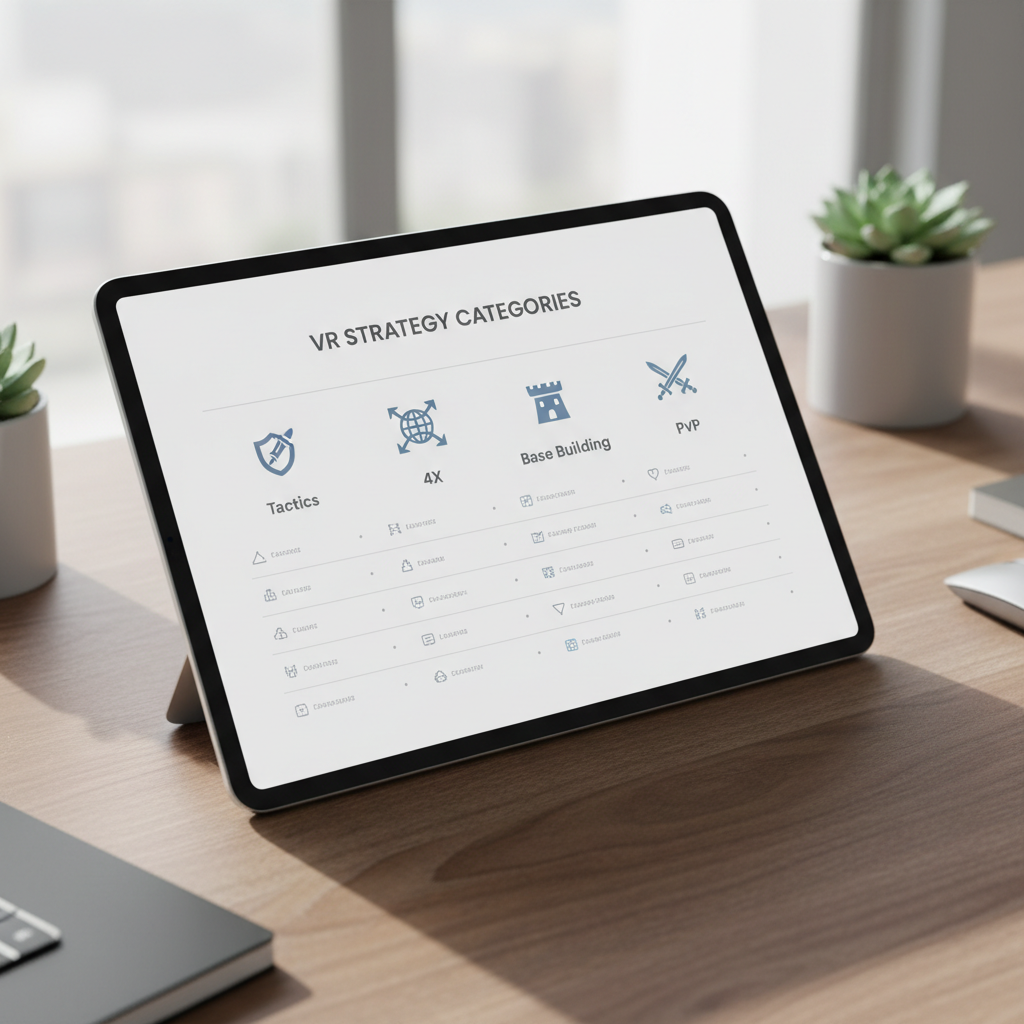
Quick picks: the best VR strategy games 2026 by play style
Because release schedules shift and platform availability changes, treat this as a curated “shortlist by category” rather than a rigid ranking. If you like a specific flavor of strategy, start there and you’ll land faster.
At-a-glance comparison table
Use this table to match your tolerance for complexity and your preferred session length.
| Category | Why it works in VR | Best for | What to watch for |
|---|---|---|---|
| Tabletop tactics / diorama | Natural “war table” control, readable scale, low motion | Turn-based fans, comfort-first players | Can feel slow if AI pacing is weak |
| Real-time tactics (RTT) | Spatial multi-unit control feels like directing a battlefield | Players who enjoy pressure and micro | UI overload if too many unit types |
| 4X / empire-lite | Immersion makes planning and scouting more engaging | Long-session planners | Text size, tutorials, and late-game speed |
| Base-building / automation | Hands-on placement feels satisfying, strong “builder” loop | Creative optimizers | Precision placement, performance dips on big saves |
| Asymmetric co-op / PvP strategy | Communication and presence become real advantages | Friends, competitive groups | Matchmaking population swings |
If you’re building your own shortlist for the best vr strategy games 2026, pick one from your “comfort” category and one from your “challenge” category, that mix tends to keep VR libraries from going stale.
How to choose a VR strategy game without wasting money
Most people pick by screenshots, then realize the interface fights them. A better approach is to decide what you can tolerate in-headset and what you want to feel.
- Session length: do you actually want 15–30 minute runs, or 2-hour planning marathons?
- Complexity ceiling: are you happy learning systems, or do you want “rules in 5 minutes”?
- Comfort profile: seated, standing, room-scale, smooth turn, teleport only.
- Input preference: controllers vs hand tracking, and whether you hate radial menus.
- Replay drivers: procedural maps, challenge modes, PvP ladders, mod support.
According to the Meta Quest Safety Center, comfort and play area setup influence how safe and enjoyable VR sessions are, especially during longer play. That’s relevant here because strategy players tend to stay in longer than they expect.
Self-check: which VR strategy subgenre fits you?
Answer these fast, then jump to the matching section when you browse storefronts.
- If you hate motion sickness risk: choose tabletop tactics, turn-based, or stationary “war room” games.
- If you want high skill expression: real-time tactics or asymmetric PvP tends to reward practice.
- If you love spreadsheets: empire/4X-lite and automation builders scratch the planning itch, but readability must be good.
- If you get bored easily: prioritize roguelite campaigns, procedural scenarios, or strong skirmish tools.
- If you play with friends: co-op command roles or team PvP usually feel more “VR-native” than solo number crunching.
One more honest check: if you already feel tired after work, a heavy 4X interface can become “homework in a headset.” In that case, a shorter-run tactics roguelite often lands better.
Practical setup tips that make strategy games feel better in VR
Small tweaks can change your whole opinion of a game, especially for the best vr strategy games 2026 contenders that aim for deeper systems.
Comfort and clarity first
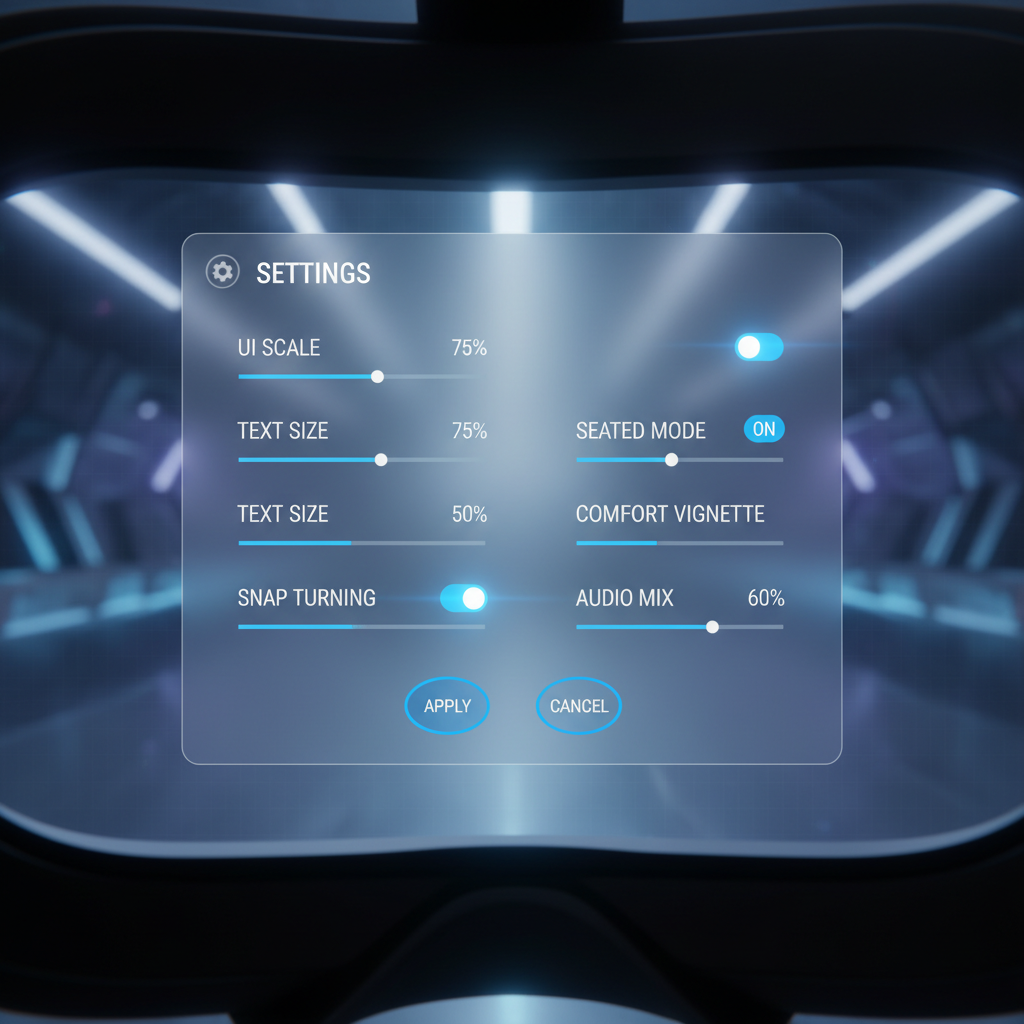
- Play seated if the game allows it: strategy rarely needs room-scale, and seated play reduces fatigue.
- Increase UI scale early: if the game offers text scaling, do it before you start learning mechanics.
- Use snap turning when available: many people tolerate it better in long sessions, comfort varies by person.
- Set your boundary generously: reaching across a war table can cause accidental boundary hits.
Control mapping: don’t “learn around” bad defaults
- Remap frequent actions to single-button or single-gesture commands if the game supports it.
- Prefer “hover + confirm” interactions over “drag precision” when you notice placement mistakes.
- If you use PC VR, check whether the title supports multiple input modes, some games feel dramatically better on different controller profiles.
Common mistakes when shopping for VR strategy (and how to avoid them)
A lot of “this game is overrated” takes come from mismatched expectations, not from the game being bad.
- Confusing vibe with depth: a great diorama look can still hide shallow decision-making, watch for AI variety and meaningful tradeoffs.
- Ignoring onboarding quality: strategy games live or die by tutorial flow, a weak tutorial can make a solid system feel broken.
- Buying for features you won’t use: “hand tracking supported” sounds great, but if it’s slower than controllers you may never touch it.
- Overvaluing content volume: ten modes with the same loop will age faster than one strong mode with smart modifiers.
- Skipping comfort notes: locomotion style and camera control matter even when you’re mostly stationary.
If you’re comparing storefront ratings, read the middle reviews, the 3-star ones tend to mention UI pain points, performance quirks, and whether the strategy layer stays interesting after the first few hours.
When to adjust expectations or seek extra help
If you’re getting headaches, eye strain, or nausea, it may not be “you being bad at VR.” It’s often a comfort setting, IPD fit, or session pacing issue. According to the American Academy of Ophthalmology, some people may experience visual discomfort with screens and close-focus tasks, VR can amplify that for certain users.
- Try shorter sessions: 15–25 minutes with breaks often works better than pushing through.
- Recheck headset fit and IPD: improper alignment can increase eye strain, consult your headset guidance.
- Consider professional advice: if discomfort persists, it’s reasonable to consult a healthcare professional.
For younger players, follow manufacturer age guidance and household safety rules, strategy games look calm, but long stationary sessions still need breaks and awareness.
Key takeaways + a simple action plan
Key points: VR strategy is at its best when the UI is readable, the command loop feels natural, and comfort supports longer sessions. The “best” pick depends more on your tolerance for complexity and motion than on hype.
- Pick your category: tabletop tactics for comfort, RTT for intensity, empire/automation for long-form planning.
- Check three things before buying: UI scaling, locomotion options, and replay drivers.
- Tune settings early: seated mode, snap turning, and readable UI prevent most frustration.
If you want one quick move today: build a shortlist of three titles in your preferred subgenre, then filter by comfort options and UI legibility, that alone usually surfaces the real best vr strategy games 2026 candidates for your setup.
FAQ
- What counts as a “strategy game” in VR?
In practice, it’s anything where planning and decision tradeoffs drive outcomes, not reflex shooting. In VR that often means war-table tactics, base management, or real-time unit control with a command UI. - Are VR strategy games better on PC VR or standalone headsets?
It depends. PC VR often enables sharper visuals and bigger simulations, while standalone usually wins on convenience. If tiny text bothers you, higher clarity can matter more than portability. - How do I tell if a VR strategy game will be comfortable for long sessions?
Look for seated mode, snap turning, minimal forced camera motion, and adjustable UI distance/scale. Comfort is personal, but these options give you room to adapt. - Do hand-tracking strategy games feel more “natural” than controllers?
Sometimes, especially for grabbing tokens and pointing commands, but hand tracking can be slower or less precise in busy scenes. Many players end up preferring controllers for speed. - What should I prioritize: deeper systems or better UI?
In VR, UI quality often comes first because it determines whether you can access the depth at all. A medium-depth game with great usability can outlast a complex game with constant friction. - How can I avoid buying a VR strategy game that feels shallow?
Check whether decisions create meaningful tradeoffs, whether the AI or scenario design changes your approach, and whether there’s replay structure like modifiers, procedural maps, or strong skirmish tools. - Is motion sickness common in VR strategy games?
Usually less common than in fast locomotion genres, but it can still happen with smooth camera movement, forced zooming, or awkward camera snapping. Adjust comfort settings and take breaks if symptoms appear.
If you’re still torn between a few options, a good next step is to write down your “non-negotiables” (seated mode, readable text, short runs vs long campaigns), then compare store pages and gameplay clips through that lens, it’s the most reliable way to find a fit without chasing hype.